
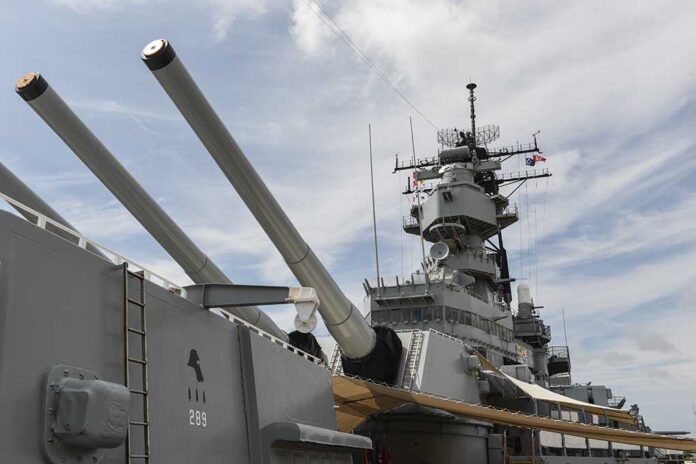
An enduring symbol of naval might, battleships continue to influence defense strategies and national pride, despite their obsolescence on the front lines.
Story Highlights
- Battleships once dominated naval warfare but have now become museum pieces.
- Their technological innovations still impact modern naval strategies.
- Debate continues on the relevance of heavy armor in contemporary warfare.
- The symbolic power of battleships remains significant in national identity.
The Historical Importance of Battleships
Battleships emerged as dominant naval forces in the late 19th and early 20th centuries, exemplified by the HMS Dreadnought in 1906. These formidable giants set new standards for speed, armor, and firepower, asserting naval supremacy across the globe. Their role was central in major conflicts like World Wars I and II, where they were both powerful assets and vulnerable targets to emerging technologies like aircraft and guided missiles.
Despite their decline post-World War II, battleships remain a symbol of national prestige and deterrence. The rise of aircraft carriers and missile ships phased them out of frontline service, yet their legacy lingers in naval doctrine and public memory. This symbolic power continues to resonate, influencing discussions on naval strategy and defense policy.
Current Role and Relevance
Today, no battleships serve in active frontline roles, but some, like the USS Iowa and USS Missouri, function as museum ships. These vessels represent a bygone era of naval warfare, yet their design principles of survivability and firepower persist in modern warship construction. Russia’s Pyotr Velikiy, classified as a battlecruiser, embodies the evolution of battleship concepts, being the largest active surface combatant.
Naval experts and historians frequently assess the legacy of battleships, with debates over the utility of heavily armored ships in modern warfare persisting. Occasional proposals to modernize museum ships for missile platforms highlight the ongoing interest in these iconic vessels, even as practical implementation remains elusive.
The Enduring Impact of Battleships
Battleships have left a lasting impact on naval architecture, shaping survivability standards and strategic thinking. Their construction drove technological innovation and industrial growth, while their symbolic value continues to permeate national narratives and military culture. Political debates over defense spending and force structure often reference the lessons learned from the era of battleships.
Read News: The World’s Most Impressive Battleships and Why They Still Matter – RealClearDefense → https://t.co/RLiPGQFCOC 🌎 #WorldMilitaryNews – WMNews
— World Military News (@WMilitaryNews) October 21, 2025
These ships also contribute to tourism and education as museum pieces, drawing public interest and fostering appreciation for naval history. The enduring lessons of battleships, from armor and firepower to their psychological impact, remain relevant in defense policy discussions and continue to influence naval strategies worldwide.
Sources:
Top 10 Biggest Battleships of All Time
Fire: Meet the 5 Best Battleships Ever Set Sail
The 5 Largest Battleship Classes Ever Built