
America’s murder rate has crashed to the lowest level in more than a century, but the real fight now is over who gets the credit and what story gets told about why it happened.
Story Snapshot
- Homicides have dropped roughly 20% in a single year, to the lowest rate since around 1900.
- The decline is broad, hitting big cities in both red and blue states, not just a few outliers.
- Experts admit there is no single proven cause, even as politicians rush to claim victory.
- The data are still preliminary, giving media and activists room to spin the trend to fit their agendas.
Historic Drop in Killings Across the Country
Recent crime data show that murders in the United States fell by about one fifth in 2025, the largest one-year drop ever recorded and likely the lowest homicide rate since around 1900. Analyses of major cities found a 21% decline in killings across 35 to 40 urban areas, equal to hundreds of lives saved in a single year. Crime researchers say the national homicide rate may be about four killings per 100,000 people, a level not seen in well over a century.
This steep drop continues a trend that started after the pandemic-era spike. National data showed murders falling in 2023 and 2024, with at least a 14% decline in 2024, before the record-setting fall in 2025. By 2026, early figures from a group of big-city police departments pointed to another 19% year-over-year drop in homicides, suggesting the country may be in a second “great crime decline,” not just a one-year fluke.
What We Know — and Do Not Know — About the Causes
Major news outlets and crime experts agree on one key point: no one can say for sure why murders are dropping this fast. Researchers from the Council on Criminal Justice, which tracks big-city crime, told reporters there is no single explanation and that it is extremely hard to isolate which factor matters most. Early studies link crime trends to many moving parts, including policing tactics, social programs, economic shifts, and long-term changes like an aging population or better emergency medical care.
Some analysts argue that life simply calmed down after the chaos of the COVID era. They point to the return of normal routines, open schools and churches, and more stable work and social patterns as possible reasons violence fell after spiking in 2020 and 2021. Others highlight expanded violence-interruption efforts, youth jobs, and targeted policing in certain cities. But these ideas are mostly based on timing and expert judgment, not hard proof that one specific policy made murders collapse nationwide.
How Politicians and Media Are Spinning the Numbers
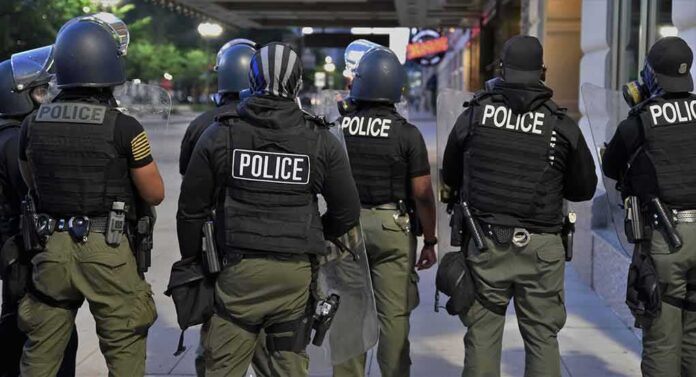
As the homicide numbers improved, the political battle shifted from “Is crime out of control?” to “Whose agenda gets the praise?” The White House has highlighted the murder rate’s fall to about a 125-year low as evidence that restoring law and order works and that stronger support for police matters. At the same time, other commentators and think tanks credit massive federal spending from pandemic relief bills, saying those dollars funded local jobs and community programs that helped cool violence.
Left-leaning outlets and experts often frame the drop as proof that social spending, not tough-on-crime policies, is the real engine behind safer streets. They point to money for community violence interrupters and a claimed decline in alcohol use as key factors, even though they also admit that cause and effect are hard to pin down. This mix of certainty in the talking points and uncertainty in the data creates a gap that frustrates many Americans who simply want honest answers instead of spin.
Why This Matters for Conservative Readers
For years, many families watched crime spike while left-wing leaders cut police budgets, pushed “defund” rhetoric, and relaxed rules on repeat offenders. Now that murders are plunging, some of those same voices want to take a victory lap without owning the damage their policies caused on the way up. Crime is falling in both red and blue cities, which suggests broad forces are at work, not just one party’s favorite program or a single mayor’s press release.
At the same time, the data experts warn that current numbers are still partly based on samples and early reports, not final nationwide counts. That leaves room for cherry-picking and confusion about which baseline to use and how big the drop really is. For conservatives, the key takeaway is twofold: first, be thankful that fewer Americans are being killed; second, stay alert when politicians and media try to lock in a simple story about why. Strong policing, respect for law, intact families, churches, and local responsibility likely all play a part — but the hard proof is still being built, and citizens should not let any side use incomplete data to sell a bigger government agenda.
Sources:
cbsnews.com, axios.com, bbc.com, cnn.com, nytimes.com, abcnews.com, en.wikipedia.org
© headlineupdates.com 2026. All rights reserved.