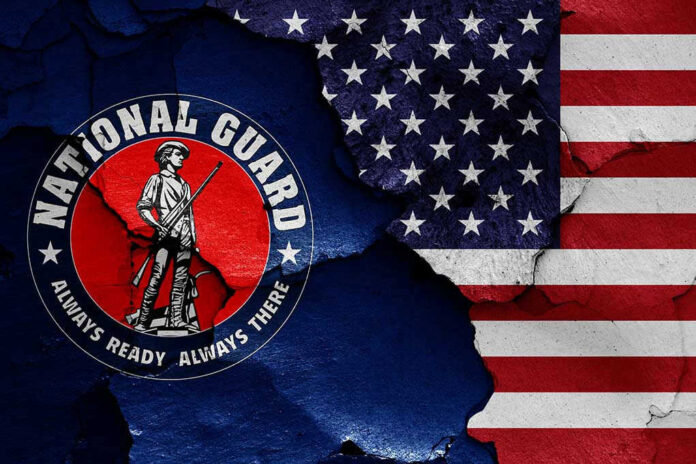
Violent Antifa protests in Portland have forced President Trump to deploy the National Guard, exposing the failures of local officials and reigniting the national debate over law and order.
Story Snapshot
- Antifa-aligned protests at Portland’s ICE facility escalated into violence, arson, and attacks on law enforcement.
- President Trump authorized a 60-day National Guard deployment after local leaders resisted federal help.
- Federal and local officials remain divided over protest management and the necessity of intervention.
- Ongoing unrest highlights deeper tensions over immigration, public safety, and constitutional rights.
Antifa Escalation Prompts Federal Action
Portland’s long-standing protest culture reached a breaking point in summer 2025 as Antifa-aligned groups staged increasingly hostile demonstrations outside the city’s ICE facility. What began as response to arrests of asylum seekers quickly devolved into a series of violent confrontations, including arson, property destruction, and assaults on officers. Federal law enforcement and local police made dozens of arrests for vandalism, assault, and attempts to damage federal property. Despite these threats, Portland’s city officials hesitated to request outside support, maintaining that local law enforcement could handle the situation.
President Trump, invoking his campaign promise to restore order, responded to the ongoing chaos by authorizing a 60-day deployment of the National Guard to Portland in late September. The decision followed a major escalation: protesters displayed a makeshift guillotine and stormed the ICE facility, with federal authorities reporting as many as 100 rioters present. The White House declared, “The Radical Left’s reign of terror in Portland ends now,” underscoring the administration’s commitment to protecting federal property and restoring peace where local officials had, in their view, failed.
Federal and Local Officials Clash Over Strategy
Conflicting statements from federal and local authorities underscored the deep divisions over how to manage the crisis. While federal agencies described the protests as a dangerous escalation requiring military support, Portland’s police chief publicly downplayed the scale of unrest, insisting that local law enforcement remained in control. This standoff reflected a broader power struggle between the Trump administration’s emphasis on law-and-order and the city’s preference for local autonomy. The Department of Homeland Security, working with the National Guard, continued to make targeted arrests for offenses ranging from assault to use of weapons such as lasers and grenades against officers.
Local officials, including the mayor and police chief, voiced concerns that federal involvement would only inflame tensions and undermine community trust. Civil liberties groups and some residents echoed these fears, warning that a militarized response could threaten protest rights and further polarize the city. Nevertheless, the persistent violence and threats to public safety prompted many Portlanders—and Americans nationwide—to question whether local leaders had lost control and if stronger federal intervention was necessary to uphold the rule of law.
Constitutional Values and Public Safety at Stake
The ongoing unrest in Portland is more than a local dispute; it has become a national flashpoint for debates over constitutional rights, immigration enforcement, and the boundaries of government authority. For many conservatives, the Trump administration’s willingness to act decisively where local leaders hesitated represents a defense of core American values: the right to safety, the importance of law enforcement, and the need to protect federal property from mob violence. Critics argue that federal intervention risks overreach and sets a precedent for undermining local governance, but supporters counter that upholding the Constitution and restoring order must come first.
As National Guard troops maintain their presence at the ICE facility and protests continue, the situation remains fluid. The events in Portland serve as a stark reminder of the challenges America faces in defending its borders, maintaining public safety, and preserving constitutional freedoms against radical agendas. The coming weeks will test whether federal resolve and local cooperation can restore stability—or whether deeper divisions will persist in one of the nation’s most contentious battlegrounds.
Sources:
A timeline of police activity at Portland ICE facility since protests began in June – KATU News
2025 Portland, Oregon protests – Wikipedia
What we know so far about the National Guard deployment in Portland – OPB
Portland protests intensify with federal troop presence and influencer arrest – MPR News
Trump, Portland officials clash over ICE protests, National Guard deployment – OPB