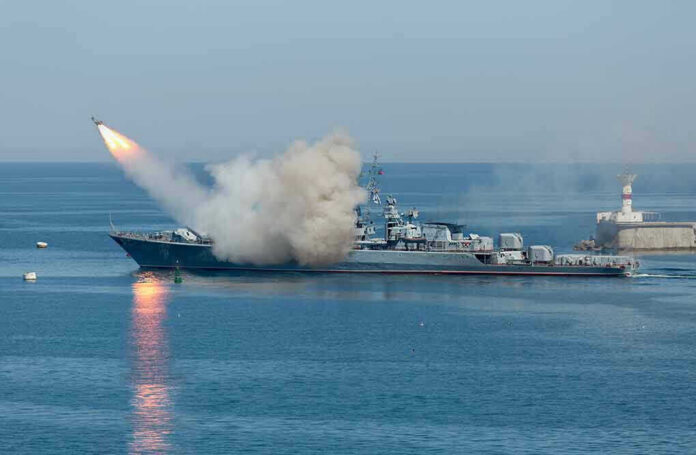
U.S. forces struck more than 80 Iranian military targets to protect shipping in the Strait of Hormuz, after Iran attacked three commercial vessels, according to U.S. Central Command.
Story Highlights
- Central Command said strikes hit air defenses, radars, command sites, and more than 60 small boats.
- The military said Iran’s aggression violated a ceasefire and threatened free navigation.
- Targets included small boats used to harass ships and coastal sensor networks, officials said.
- Iran disputes blame for the ship attacks, and the ceasefire status is contested.
Central Command Describes Aimed Degradation Of Iran’s Maritime Threat
United States Central Command said its forces hit more than 80 Iranian targets, including air defense systems, command and control networks, coastal radar sites, anti-ship missile capabilities, and over 60 Islamic Revolutionary Guard Corps small boats. Central Command said the goal was to degrade Iran’s ability to attack international commerce moving through the global trade corridor and to uphold freedom of navigation in the Strait of Hormuz, a narrow waterway vital to energy markets.
Central Command described Iran’s earlier actions as “unwarranted” and a clear violation of a ceasefire. The command said U.S. forces remain postured and prepared to hold Iran accountable if agreements are ignored. Officials emphasized that these strikes were designed to reduce risk to merchant crews and to deter further attacks on civilian shipping, not to trigger a wider war. Reporting noted the approach was intended to send a clear message while managing escalation risk.
Attacks On Three Commercial Vessels Prompted The U.S. Response
U.S. officials linked the strikes to recent attacks on three commercial vessels. The ships were identified as the Marshall Islands-flagged MT al-Rakayat, the Saudi Arabia-flagged MT Wedion, and the Liberian-flagged Cypress Prosperity. These tankers operate in or near Omani waters along established routes for global trade. The incidents raised immediate alarms over crew safety and the free movement of energy shipments through the region’s most important shipping choke point.
Administration officials said the target list focused on capabilities Iran uses to threaten ships. They cited small boats that harass commercial vessels, underground storage used to stage weapons, coastal sensors that track traffic, and radar sites that cue anti-ship missiles. This target mix points to a plan to interrupt the kill chain that links detection, tracking, and strike. By breaking that chain at multiple points, the United States aims to make future attacks harder to carry out.
Competing Claims Over Ceasefire And Attribution Persist
Tehran has not formally admitted responsibility for the attacks on the three ships. Iranian state media suggested at least one vessel ignored warnings. Iran’s speaker of Parliament accused the United States of violating a ceasefire, which clashes with the U.S. claim that Iran broke it. Central Command’s posts did not include detailed timestamps, damage figures, or released intercepts. Those limits leave some questions open while not altering the U.S. decision to strike based on its assessment.
The @CENTCOM:
U.S. Central Command forces began launching more strikes against Iran to continue degrading their ability to attack civilian mariners and commercial ships freely transiting the Strait of Hormuz. The Commander in Chief has directed the strikes to hold Iranian forces…
— Shalinder Wangu (@Wangu_News18) July 12, 2026
This exchange follows years of similar maritime flare-ups in the Strait of Hormuz. Since 2019, both sides have accused each other after attacks on commercial shipping, often without independent forensic proof. Analysts have noted that many incidents lack publicly verified attribution, even as navies raise threat levels and reroute ships. That history explains why the United States aimed at systems that enable harassment at sea, seeking to protect crews and keep oil and goods moving despite contested narratives.
What It Means For U.S. Interests, Allies, And Your Wallet
The strikes signal that the United States will act when ships are hit and lanes are threatened. Protecting the Strait matters to every American family. When tankers stop, prices rise. By taking out radar, sensors, missiles, and attack boats, the United States tries to keep sea lanes open and deter more hits on civilian crews. Allies who rely on this route also depend on steady flows. Strong action now can prevent more costly trouble later if it restores safe passage.
What To Watch Next: Shipping Flow, Oil Prices, And Iran’s Response
Watch for changes in ship traffic through the strait over the next several days. If flows recover and crews feel safer, the strikes achieved a core goal. Monitor oil prices for signs of easing as risk premiums fall. Also watch for Iran’s next move. If Iran holds fire, pressure may ease. If it answers with drones or missiles, the cycle could continue. U.S. officials said forces remain ready to respond to protect ships and crews as needed.
Sources:
townhall.com, iranintl.com, investinglive.com, youtube.com, thehill.com
© headlineupdates.com 2026. All rights reserved.