Ukraine’s biggest drone strike yet on Moscow just set a major oil refinery on fire a few miles from the Kremlin, bringing the war straight onto Vladimir Putin’s doorstep and exposing how fragile his war machine really is.
Story Snapshot
- Ukrainian drones hit a major Moscow oil refinery in the largest strike on the capital since the full-scale war began.
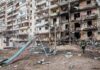
- Fires, thick smoke, and airport shutdowns showed Russians the kind of chaos their own military has long inflicted on Ukrainian cities.
- The refinery, only about ten miles from the Kremlin, is key to Russia’s fuel supply and its broader war effort.
- The deep strikes highlight how drone warfare is changing the balance of power and raising big questions for U.S. policy and taxpayers.
War Comes Home to Moscow’s Backyard
For more than four years, Russians watched the war in Ukraine from a distance, while their own missiles smashed Ukrainian homes, power plants, and hospitals night after night.[19] That picture just changed. In mid-June, Ukraine launched what CNN called the largest drone offensive on Moscow of the full-scale war, sending long-range drones deep into Russian territory and slamming a key oil refinery that helps fuel Putin’s war machine.[3] Russia’s Defense Ministry claimed hundreds of drones were shot down, but even their own numbers admitted a massive strike package that overwhelmed layered air defenses around the capital.[3]
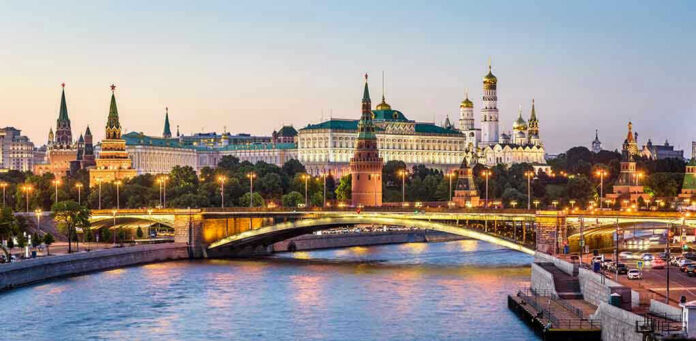
The main target was the Moscow Oil Refinery at Kapotnya, a Gazprom-run facility in the city’s southeast, described as one of the biggest in the capital region.[1] Reporters on the ground described thick black smoke billowing over Moscow after at least one drone slammed into refinery infrastructure, triggering a fireball caught on multiple videos.[1] Analysts note this was the refinery’s second hit in a week, with drones returning after an earlier strike had already forced a shutdown of its main crude unit, showing a pattern of repeated pressure rather than a one-time stunt.[4] The site sits only about ten to sixteen kilometers from the Kremlin, giving the attack huge symbolic weight.[1]
Refinery Strike Shows Putin’s Defenses Are Not Untouchable
Moscow is supposed to be the most heavily defended airspace in Russia, ringed by advanced surface-to-air systems and electronic warfare assets.[3] Yet even Russian officials admitted that, on the night of the big strike, large swarms of Ukrainian drones got close enough to force emergency measures in the capital.[3] City authorities temporarily suspended operations at major Moscow airports as debris and incoming drones made air travel unsafe, causing hundreds of flights to be delayed or grounded.[3] Reuters and other outlets reported that a high-rise apartment building, an industrial facility, and private houses in the wider region took damage, with at least a dozen people injured.[4]
The refinery itself is not just another industrial site. Western and Ukrainian reporting ties these strikes to a broader campaign against Russia’s energy system, which still funds much of the Kremlin’s war effort.[3] Reuters has documented that Russian gasoline supplies have already come under pressure, forcing Moscow to look at importing fuel by sea as domestic refineries suffer repeated drone hits.[4] When a refinery that close to the Kremlin has to halt operations more than once in a matter of days, it sends a clear message: the rear areas that support Russia’s army are no longer safe. That makes it harder for Putin to promise his people that life at home will stay normal while the war drags on.
Ukraine’s “Long-Range Sanctions” and Russia’s Fuel Problem
Ukrainian leaders are open about what they are doing. President Volodymyr Zelenskyy has called deep strikes on Russian energy facilities a “just response” to missile and drone attacks on Ukrainian cities, and his government has said the goal is to make Russians “feel the consequences of war at home.”[3] Analysts describe this strategy as using drones as “long-range sanctions”—cheap, homebuilt systems hitting oil refineries, depots, and power plants across Russia to do what Western economic sanctions have not fully achieved.[1] According to figures cited by the Council on Foreign Relations, nearly forty percent of Russia’s oil export capacity has been disrupted by Ukrainian drone attacks on energy infrastructure.[3]
Those numbers matter far beyond the battlefield. Russia’s oil and gas sales have helped Moscow ride out Western sanctions and keep money flowing to the military.[3] By hitting energy hubs like Kapotnya, Ukraine is trying to choke that revenue at its source. Each successful strike forces expensive repairs, increases insurance costs, and rattles global markets. For American readers already angry about high energy prices and years of Washington’s confused energy policy, this is a reminder that far-off wars and pipeline politics do not stay “over there” for long. They affect what families pay to heat homes, drive to work, and run small businesses, and they shape the global leverage of regimes like Putin’s.
Drone Warfare, Escalation Risks, and What It Means for America
Deep inside Russia, residents are now seeing scenes Ukrainians know too well: night skies lit by explosions, smoke covering highways, and emergency crews racing to burning sites.[1] Coverage from outlets like NBC shows Moscow’s skyline choked with smoke from the refinery blaze, while social media clips circulating online capture refinery tank lids blown skyward by blasts.[1] At the same time, Russian officials and state media try to downplay the damage, stressing that their air defenses destroyed most inbound drones and insisting these attacks do not change the bigger picture of the war.[4] That narrative aims to keep the Russian public calm and avoid admitting a major security embarrassment in the capital.
#Ukraine appears to be taking the fight deep into #Russian territory…A massive drone attack forced the temporary shutdown of all four #Moscow airports. @kartikeya_1975 @SwaranSinghJNU #OnPoint
https://t.co/AlOdU9Hzkf— News9 (@News9Tweets) June 22, 2026
For the United States, these strikes raise hard questions. Drone warfare blurs front lines and pushes conflict deep into the homeland of a nuclear-armed power, something old Cold War planners tried to avoid. Ukraine’s campaign is driven by survival after years of brutal Russian attacks on its own civilians and power grid.[19] At the same time, as Washington debates more aid and as American taxpayers shoulder the bill, there is a growing need for clear limits, honest goals, and strong oversight. Patriots want to help a free nation under attack, but they also remember how endless wars, murky missions, and blank checks have burned this country before. Keeping pressure on both Moscow’s aggression and Washington’s spending is the only way to defend our security, our wallets, and the constitutional principles that should guide when and how America gets involved overseas.
Sources:
[1] Web – Target Moscow: The Ukraine War Has Come Right to Putin’s Doorstep
[3] Web – Ukrainian forces struck the Moscow Oil Refinery in the Russian …
[4] Web – Ukraine launches largest attack on Moscow since start of full-scale …
[19] YouTube – Ukraine’s Strike Campaign – The Moscow Raid & Trends in the Long-Range …
© headlineupdates.com 2026. All rights reserved.