A Pennsylvania would-be Senate challenger is now in federal custody after investigators say he left voicemails describing, in graphic detail, how President Donald Trump should be killed.
Quick Take
- Federal agents arrested Wilkinsburg resident Raymond Eugene Chandler III after alleged voicemails threatened President Trump, a member of Congress, and the lawmaker’s daughter.
- Unsealed court documents describe explicit threats, including urging a congressman to shoot Trump in the Oval Office.
- Authorities say the FBI and U.S. Secret Service investigated and executed the arrest at Chandler’s home, removing evidence for hours.
- Sources describe Chandler as a self-proclaimed U.S. Senate candidate planning to run against Sen. John Fetterman in 2028, though reports do not clearly establish Chandler’s party affiliation.
Federal Case Centers on Alleged Voicemail Threats
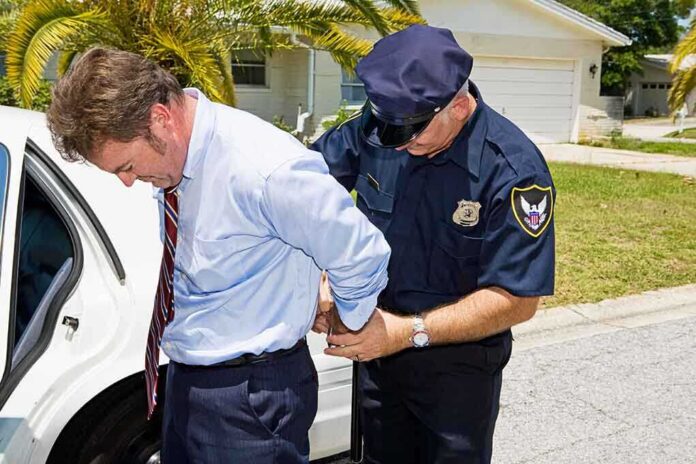
Raymond Eugene Chandler III, a Wilkinsburg, Pennsylvania resident, was arrested by federal agents after investigators say he left a series of voicemails threatening to kill President Donald Trump and also threatening an unidentified member of Congress and the congressman’s daughter. Reporting based on unsealed court documents describes the calls as escalating into explicit violence. Chandler remains in federal custody as prosecutors pursue charges tied to threats against protected officials and family members.
According to the court filings described in local reporting, one voicemail urged a member of Congress to take a firearm to the President’s head and pull the trigger. Another message threatened extreme violence against the lawmaker, the lawmaker’s daughter, and others. While political speech is broad in the United States, direct threats against a president or federal officials are treated as public-safety matters, not campaign rhetoric, and they routinely trigger federal investigations.
Arrest and Search in Wilkinsburg Highlight Secret Service Role
Agents arrested Chandler at his home on Biddle Avenue in Wilkinsburg, an Allegheny County suburb near Pittsburgh. Reports from the scene describe investigators spending hours at the property and removing evidence. The involvement of the U.S. Secret Service matters because presidential protection is one of its core duties, and alleged threats—especially those describing a method, location, or intended “instruction” to another official—typically receive heightened scrutiny compared with generalized online venting.
Local coverage also noted a strange juxtaposition: Chandler’s Senate-campaign flyers were still visible in the neighborhood even as federal agents executed the case. That detail underlines a reality both left and right increasingly recognize—political instability is no longer limited to national headlines or big cities. When threats come from someone presenting himself as a candidate, authorities face added pressure to act quickly, because the person may seek public attention, proximity, or legitimacy.
What’s Known—and Not Known—About Chandler’s Politics
Some social media posts have labeled Chandler a “Democrat Senate candidate,” but the available reporting summarized in the research does not clearly confirm his party affiliation. What is supported is narrower: Chandler is described as a self-proclaimed U.S. Senate candidate planning a 2028 challenge against Sen. John Fetterman, a Democrat. With limited biographical detail in the sources, readers should separate confirmed facts from partisan framing that spreads rapidly online.
Why This Story Hits a National Nerve in 2026
Threat cases land differently in a country already exhausted by institutional failure, rising cynicism, and a sense that “the system” protects insiders while ordinary Americans are left to absorb the consequences. Conservatives are likely to see the alleged calls as another example of escalating political hostility toward Trump and the America First movement. Many liberals, meanwhile, see political violence as a broader disease. Either way, federal law draws a line at threats, because intimidation corrodes democratic accountability.
Pennsylvania Democrat Senate Candidate Raymond Chandler Arrested for Threatening to Kill President Trump
READ: https://t.co/65YEBFDmw5 pic.twitter.com/K1vSjACmb3
— The Gateway Pundit (@gatewaypundit) May 3, 2026
For now, the public record described in the reporting focuses on the content of the voicemails, the arrest, and the evidence collection. Sources do not provide prior incidents involving Chandler, a detailed motive, or extensive commentary from experts or officials beyond what appears in court documents and standard case summaries. The next key checkpoints will be court hearings, any defense filings challenging the allegations, and whether prosecutors outline a clearer timeline of how investigators identified Chandler as the caller.
Sources:
Wilkinsburg man charged with threatening Trump, family of senator